Meister Eckhart & Hinduism: East Meets West as We Face a Common Adversary
Meister Eckhart’s deep resonances with the Hindu tradition may partly be explained by the Celtic presence among the Middle Age Rhineland mystical movement, so evident

Meister Eckhart’s deep resonances with the Hindu tradition may partly be explained by the Celtic presence among the Middle Age Rhineland mystical movement, so evident

The Dali Lama observes that the Number One obstacle to Deep Ecumenism is a bad relationship with one’s own faith tradition. Many Christians are illiterate
An uncanny experience of Deep Ecumenism can be found in the work of Meister Eckhart. Writing in the late thirteenth and early fourteenth century (1260-1329),
Continuing our meditations on Deep Ecumenism, we recognize the end of October and early November as a season of the dead very important to Celtic
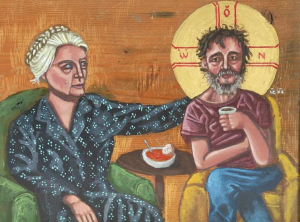
A saint is a kind of flesh and blood archetype who is said to have lived a life of greatness or originality, a non-banal life
The Tao Te Ching underscores the importance of the inner work as non-action when it says: “Practice not-doing, and everything will fall into place.”
We are considering how Deep Ecumenism sheds light on human work. In my book, The Reinvention of Work, I invoke Deep Ecumenism as a method,

We are discussing a question posed to me recently about the origins of the term Deep Ecumenism in my work. Besides the 18 themes in

We are talking about Deep Ecumenism and especially in the context of the upcoming COP meeting in Scotland next week addressing the following questions: Can
In my book, One River, Many Wells: Wisdom Springing from Global Faith Traditions, (published in 2000) I treat 18 themes that I propose are found